acts of transformation
from an interview with Kevin Liggett, conducted on 22 April 2026
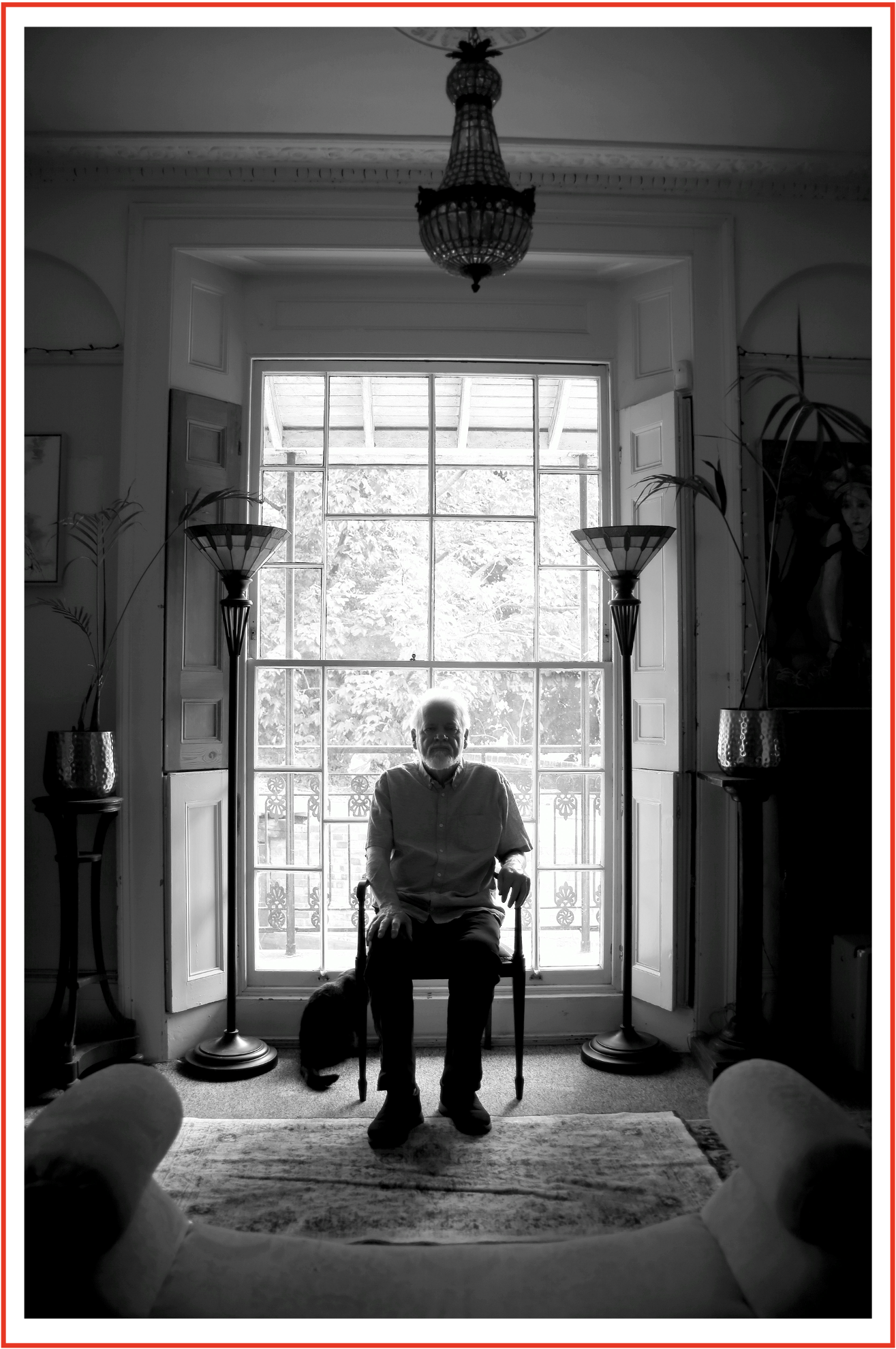
Kevin Liggett | June 2026 | Photography by Yvonne Liggett
a philosophy of creative education
I really wanted every student and every member of staff to be agents of change.
I think our sense of the world, and our place within it, can often be confusing. Having goals as individuals gives us direction and helps us make sense of the path we choose to follow.
I also believe we have a responsibility to try to change things for the better. It may be complicated, and we may not always succeed, but the effort itself matters. If we stop trying, life can become a deeply despondent experience. Even small acts of improvement can give purpose to both our lives and the world around us.
At the highest level, I want you to actually change something for the better. But what is happening in that process? You are changing yourself by acquiring new skills. You are changing yourself by being able to talk to a wider range of people. You are changing yourself because you have a greater understanding of the medium you are working in and the world that you operate in.
I want people to be agents of change, but also to be aware of what is around them and to generate at least some structure of understanding of how the world works.
When I went for my job [at the Medway College of Design in 1974] I had been working as a photographer in industry, and they asked me why I wanted it. I said: because I never want to work in my life. They asked what I meant. I said, I am coming to an art school, and I want to be engaged and informed by all the ideas that these young people bring. I was only twenty-four at the time. I wanted to be in an arena of people talking about ideas, being excited, and helping people do exciting things.
the course culture
In the first year, where we were laying the foundations of photography, the way we did that was through very vigorous critiques. We had small groups, not large groups — no more than ten. The students would sit down with as many of the staff as could be there, and we would start to encourage them to voice their opinions.
One of the things they found strange to begin with is that normally, you do a project and if it doesn’t quite meet the criteria, it would be termed a failure. But what we said is: instead of terming it failure, let’s look at this as an opportunity to reference why it wasn’t successful. That process eventually meant that we got a group of students who were confident and encouraged to take responsibility for their own learning.
Some of my colleagues were famous for saying what they thought, and at the beginning students sometimes found that confrontational. But by the end of the first year, the students would be doing the same thing — saying what they thought.
When I first started teaching, there was a whole group of people telling me how bad the students were. My view was always: is the teaching as good as it can be? And the answer was invariably no. Tutors have to actually believe that the students are producing worthwhile work and that they are making progress.
the cohort
We launched the degree in 1996, but that was a small intake. The In Motion students were the second large intake. We wrote about the course in quite a different way — talking about this idea of narrative, this idea of understanding the language, grammar and syntax of photography. We were successful in getting an application rate of something like four to one. You can do a lot with that.
I was the main person interviewing applicants, and I had a view that I wanted international recruitment because I felt that the area we were working in — the arts, and particularly photography — needed to have a diverging group of influences. The theoretical context of the subject itself was very international. The actual medium was global. It was exciting to think of having students from different countries because we wanted to have this melting pot of ideas. We felt that would be very stimulating for everybody, including the staff. And we were fortunate — we were able to do that.
In the first year, in the first couple of weeks, we asked the students to photograph something that they found unusual or different, which they hadn’t seen before. The Norwegians photographed the Medway riverbank — a picture of the water, the bottom and a bit of mud. We were looking at it saying, that is not a very interesting picture, what is it about? Apparently, in Norway, because they are further from the equator, the tidal difference of rise and fall is almost unnoticeable. You might think that is a minor thing, but it shows you that we are complacent about our perception of the world around us.
When their working day ended, our students would go down to the college bar. That area was not only where our own students met and discussed ideas, but they interacted with people from across the college. So strategic alliances formed across the college — with fashion students, model-makers and others. What was emerging was a forum for students engaged in different disciplines to discuss work.
from consumers to authors
Going onto a photographic course and being interested in photography does not get you very far; it is the other things you are interested in that matter.
In the prospectus for the degree course in photography, we said that what we hoped to do with students was turn them from passive consumers of images into authors who would be able to use the language of photography to produce narratives which conveyed meaning.
In the first year, we were deconstructing the language of photography so that students had an understanding of it. We then moved into the second year, where we developed the idea of narrative and the way that you express ideas. In the third year, we wanted the students to work and perform in the public arena, to be outward-looking and to break the mould of the typical art school in the way that it interacted with the outside world.
The final project each cohort completed at the end of the third year had the general title of “publication”. The traditional end-of-year show tended to be a rather insular event directed towards a particular audience, whereas the publication brief was given to the students as an autonomous project.
Taking the photographs was an important part of what they did, but so was the generation of an idea: what they wanted to say, what information they wanted to transmit, who the audience was. They then worked their way through all of the things that you would do if it were a publication.
When you are publishing something, you have to be acutely aware of who your audience is, so that the images are accessible. There is this myth that people often talk about art, saying it depends on the interpretation of the individual, but the truth is that we have a shared culture. When we look at things through that lens of shared culture and find meaning, it is possible to generate something where you can predict the parameters of how it is going to be interpreted.
One ambitious realisation of that thinking was Closer: a pan-European exhibition of digital artworks presented simultaneously in four transport hubs — Zurich Airport, Cádiz Seaport, Stuttgart Railway Station, and Canary Wharf in London. It attracted audiences at each location, and online, so people around the world could follow it as it unfolded. Closer showed that we could operate at scale in the public arena, and it established the register: public engagement, collaboration, accessibility, and a willingness to work across boundaries.
in motion
All art schools traditionally have this idea of having an end-of-year show, and this certainly is not what In Motion was. It was a much broader idea than that. It was a group of thirty-eight students and staff who put together an event where you actually saw photographers emerging from Rochester who had mastered the skills of presenting ideas through the form of narrative. They were not presenting pictures just for your entertainment or delight. Within them were messages about social, political and ideological ideas.
The project was based on transformation. The site for the exhibition, the Hackney Downs school, had been written off as failing; the expectation you would have when you went in was that it was going to be a very depressing and unrewarding experience. The ambition of what this group of students was attempting to do — turning an abandoned school into an exhibition space — was outrageous, but it was the culmination of a journey they had been on for three years.
hackney downs
At the beginning of the process, the cohort got together and started the initial planning. What emerged from that was this idea of In Motion as the general umbrella title. The group had to decide how they were going to operate — the project was so daunting that without assigning roles to people, there wasn’t going to be any chance of it working.
They decided to elect Muzi Quawson as the director of the project. Muzi came from London and was going to have lots of connections there. She started to scout out possibilities. She liked the school because, in a way, it was the opposite of what you would expect.
The surrounding inhabitants of the area were very unhappy about what had happened to the school. They felt that they were being victimised and penalised. It was a deprived area, but on top of that — it had a swimming pool, it had workshops, it was a well-equipped school — and the choice was made to close it. I don’t know the complete history, but that was an act of social vandalism. Whatever the school needed, it should have been turned around.
Muzi found out that the school was being looked after by a sort of local security firm, and she arranged to meet the head of this firm. We had to meet him not in an office but outside a designated tube station. We got into the back of this very big car, had a conversation, and he gave permission for us to undertake this. That was quite extraordinary, really, because you have to think what was in it for him. There was nothing in it for him. But even though he appeared to be the stereotype of a head of a security company, he must have listened to the rationale of why we wanted to do it. Muzi was very persuasive, and he agreed. When you think about it, it was an extraordinary and rash thing for him to have done. It was quite rash to get in the back of the car too.
When the work to prepare the school for the exhibition was taking place, a deputation of local inhabitants confronted the students, because what they thought was happening was that the school was going to be turned into artists’ studios, and they felt that was inappropriate. But when it was explained to them that it was a group of students who were going to be producing an event, and that they wanted it to be educational — with opportunities built into the programming for children to come and visit, and for the local population to be welcomed — the students would actually greet people and take them around and explain what was happening. Then the opposition from the local population evaporated.
100 days in the making
A minibus would go to the site every day, and on the minibus would be something like eight to twelve students. That commitment goes back to the students taking on roles and responsibilities. They realised that to undertake something as large as this, they would need a schedule of works.
What was amazing is that they behaved as a supportive community. Nobody tried to get out of it. Everybody felt responsible. They were always on the minibus. They went and they were working in conditions that were very harsh — no heating — and they were doing some extraordinary things. In the beginning, some really distasteful jobs. The swimming pool was filled with, I don’t know, ten or fifteen years of pigeon shit — a health hazard. But they donned masks, cleaned it all out. To stop the pigeons getting in: a cherry picker. Somebody went up there, they put polythene over all the windows so they couldn’t get in. They spent days, hours, weeks scraping the floors, getting the paint off. They then undertook plasterboarding of some of the areas.
At the beginning there needed to have been an analysis of what they needed — a work schedule — and feeding into that were things like hiring cherry pickers, getting timber, getting sponsorship. We got sponsorship, for instance, from a flooring company who gave us a whole roll of non-slip lino so we could use that in the newly cleaned swimming pool, which was not going to be used as a pool. The whole space was actually an area where there were projections and people using the floor. There were rolls and rolls of transparent material used to diffuse the lighting in the bigger galleries.
All of those technical problems, plus the actual manual work, were successfully taken on by a very committed group of students.
To do something like this, you have to believe that you are going to do it, but you also have to believe it is worthwhile. I think you have to say that this group of students confounded the stereotypes about what art students are supposed to be, and even what young people of that age are supposed to be like.
The students got unconditional support from the course staff. That is a big claim to make, but I think the students sensed that. They felt secure in terms of what they were doing. Maybe when they went on the first trips [to the school] they thought “oh no”. But what was really evident is that they could see it was working. As the project unfolded — and they were learning from it — they could see that it made a difference. They could see the rooms being transformed. They could see that the planning and the way the place was going to operate made sense. It wasn’t a disparate group of rooms with a load of photographs stuck in. They became invested in it as it went along.
I obviously believe the reason these students became so successful after leaving is that they actually understood they had to take action to make a transformation work. They had to invest whatever was necessary, and all of these things — sweeping the floor, scraping up the pigeon shit — were not beneath them. They were an essential part of making a success of what needed to happen. And they believed it as it happened.
Things like this go wrong all the time. I was amazed that we didn’t have the bickering.
There were a couple of students, for various reasons, who were struggling, and the group picked them up, ensured that their work was in place and shown. There was a student who left at the end of the first year, but they actually included his work in the show. There was a real cohesiveness and supportiveness.
trust and risk
You have to acknowledge that without taking risk, you probably won’t achieve anything that’s really outstanding or different or notable. The reason we take risks is because we want something to be extraordinary.
If you were a performer and you went on stage, there’s a possibility you’re going to fall flat on your face. What the students were doing was high risk in the sense that they were performing at a very high level. We had multiple galleries, over 400 large inkjet prints, massive projectors, large screens in large areas, a swimming pool. It was like a circus. And they were going to perform in front of an audience.
You have to have confidence in your work to want to be judged by an audience. Someone coming along and saying, “Oh, you made a big splash, but the work’s a bit disappointing” — because often, sometimes with events, the event is doing all the heavy lifting. This was an instance where the heavy lifting was on both sides, because while the transformation of the site was going on, there was a huge production line back at Rochester in the digital lab, producing all the artworks — editorialised, retouched, colour-graded, printed.
The process of editing your work, choosing the work, was a major part of that third year. I used to say: you have taken the pictures, now so what? The really important thing is then to edit them, to make a coherent narrative, which is something that was often lacking at that level because it was too much of an internal process.
There wasn’t any excuse of it being a degree show. It was an event. It had to stand on its own.
spaces and installations
When you approached the school itself, it had all the signs of dereliction: boarded-up windows, peeling paint, the landscaping wasn’t neat as you entered the front. But then, as you entered, it was like passing through Alice’s looking glass — a portal of light, colour and conversation. The scale of the event, the number of galleries, the impact of over 400 large-scale photographs engaged in social, political, and intellectual ideas expressed through exuberant photographic images — it made it an exciting experience for guests and a validation of the students’ hopes and aspirations for this amazing venture.
In the planning stages, the students and the staff had to look at the spaces. There were some that initially you would say were the optimum ones, which were more like traditional gallery rooms. As it went on, what happened in the outside spaces was particularly interesting. By using a background material that provided a backdrop to the photographs, and because there was an interplay of natural light, when you actually saw those photographs, it wasn’t a compromise. The two things enhanced each other.
There were installations within small dark rooms. There could be a video playing and it was a very intimate experience. I remember in particular there were some pictures of the Rwandan genocide — war pictures — and they were in a small room. I think that some of the subjects which were more emotionally charged, for them to be in the shared space was not right. It needed that intimacy. It also gave the individual time to be quite emotional when looking at the pictures and actually recognising that these were not superficial. They were a historical record of a very distressing period.
There were pictures of Holocaust survivors. The student actually adopted a very interesting strategy of photographing the actual guards and the survivors. All of them were in their seventies and eighties, all in domestic situations. One of the intriguing things was that you looked at these pictures trying to decide who was the survivor and who was the guard. You could tell — it did affect the way you looked. There was something about looking into the eyes of the people: you could sense that somebody had had quite harrowing experiences. I’m not suggesting that the guards didn’t have those too, but even after — I don’t know how many years, perhaps fifty — you could see the guilt of what they did was still there.
I’m remembering the Chernobyl pictures. Someone went and photographed that: a classroom with children’s paintings, bits of glass strewn across the floor, and a funfair, caught in time — the Ferris wheel stuck, the bumper cars gone.
One of the students did a pastiche of a family album and documented five decades of family history. They built a room inside a room, so it was a very complete installation. It wasn’t a gimmick — the two things worked incredibly well together, supporting that idea.
There were corridors where you had illuminated light paintings on the walls. Because they were backlit, you might say that the corridor required that. But there was something about the subject matter and the way the light functioned, walking down the corridor and moving through pools of light.
There were conversations going on in the galleries, in front of the pictures — a lot of conversations. The atrium space, the light, people feeling as if those outdoor spaces were very special because you could be amongst the work. It was part installation, really. The actual galleries were installations.
The overall standard was extremely high. I think that showed the group effect — where you had a group of people performing at a very high level, the whole performance was lifted.
There were groups of pictures that had real emotional effect. When you looked at them overall, you weren’t just going to see a set of pretty pictures for aesthetic pleasure. They were thought-provoking. You could spend time looking at pictures, drinking in the message and the way it was done.
You could walk from one room to the next, and that was the joy of it.
diversity, dialogue and transformation
Caroline Scott, who wrote the preface to the catalogue, identified three unifying concepts of In Motion: diversity, dialogue, and a desire for transformation. That feels right.
Even though there was diversity, there was still a uniformity in terms of the level of sophistication. The intentionality of the work — that’s the thing. All the work felt intentional.
Having spent all that energy producing this amazing, demanding project, the students then decided to go into Rochester Castle and do another event. I think that was really because they wanted to celebrate their success as a group of people working together. When they did the castle event, those same cooperative instincts emerged — the scaffolding was erected as a group. When it actually happened, it was a celebration — for both students on the course and students from across the college. A lot of them came, and it was interesting that it was in Rochester — a way of celebrating the fact that this event had emerged from a group of students from a college in Rochester.
still in motion
At the moment, it’s difficult to see the circumstances that would enable a similar event to emerge in the current climate. But I think it’s an important historical point, and it describes a way of approaching the teaching of an arts subject which may be useful in the future — even if it can’t be implemented in the same way. I think there are some tenets in terms of the way that a community of both staff and students can work together to produce what I still feel is an extraordinary event.
Having watched the archival films, I am convinced that it is a significant turning point in arts education. I envisage that current and future educators may wish to reference this educational philosophy of ambition, risk and community, and incorporate some of those ideas into future course development.
We are going through a particularly bleak period in arts education, and it may be that you can’t recreate the same conditions, but there are broad principles. It’s about working as a community. If you can encourage students to become self-learners at the earliest stage of the programme, and to look upon fellow students as a resource rather than a competitive hindrance, and if you focus on something outside the course rather than internally — where you’re actually trying to provide some insight into current society or future society — you’re fulfilling the role of an artist.
In year one the students were asked to take themselves seriously, and in year two they were encouraged to develop their individual voice. When it came to In Motion, the students took themselves seriously — because the photography course had taken them seriously from the beginning.
diversity, dialogue, transformation
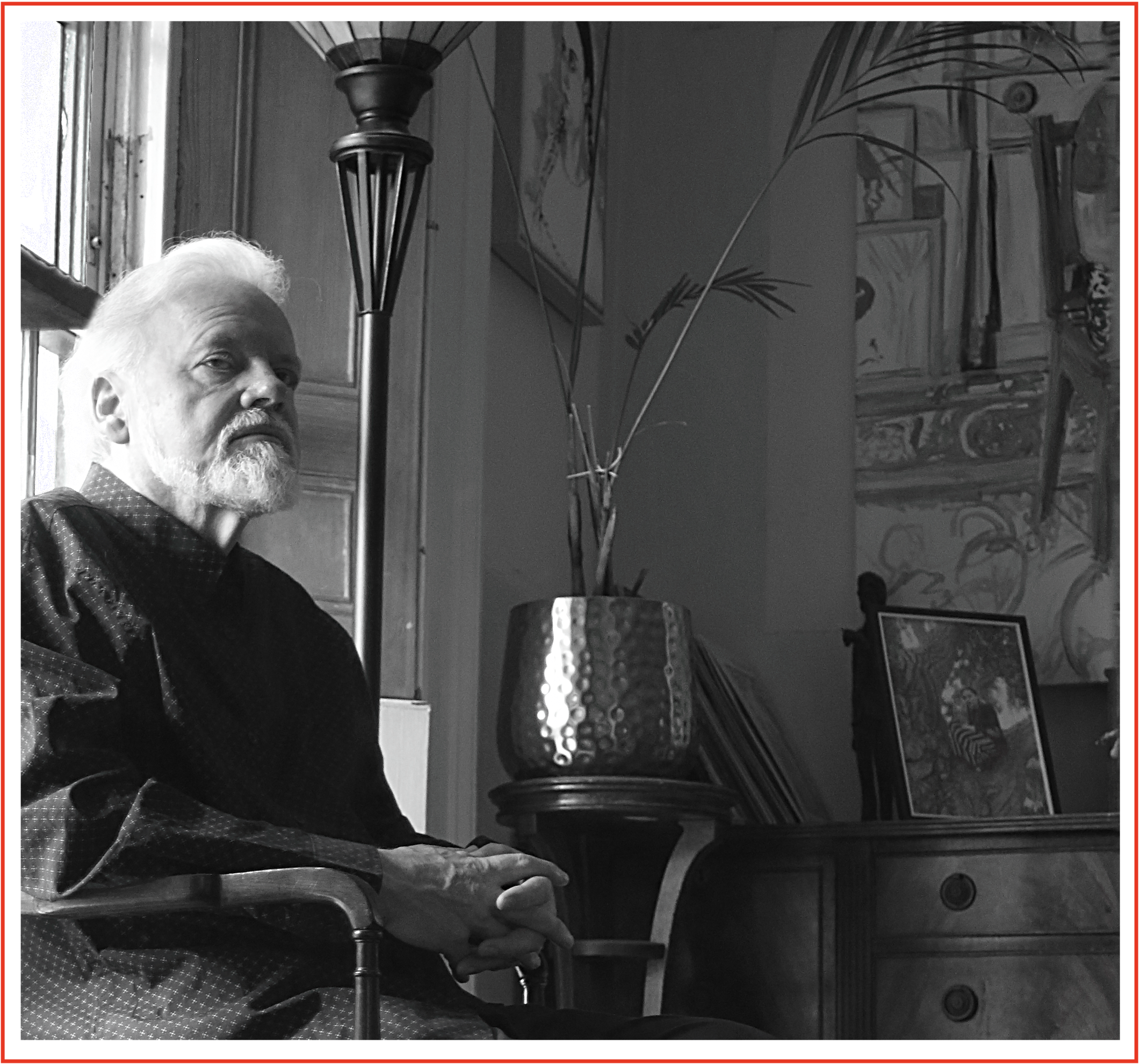
Kevin Liggett | June 2026 | Photography by Yvonne Liggett
Kevin Liggett | June 2026 | Image by Yvonne Liggett